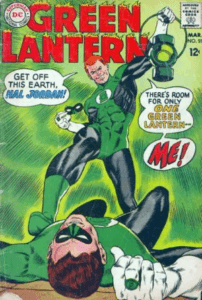
If you have looked up what this comic is worth, you have probably seen a figure around $258,000. That number is real, it was a CGC 9.0, and it sold in August 2011. Which means the figure the guides still carry is fifteen years old, and it belonged to a higher-grade copy than the one that just beat it. Action Comics 10 value starts right there.

In March 2026 a CGC 8.0 copy of Action Comics #10 sold at ComicConnect for $431,250.
That is roughly two thirds again above the old record, in a copy a full grade lower. Anyone quoting you off a price guide for this book right now is quoting you off history.
There is now a second point. Two months later, in Heritage’s May 2026 auction, a CGC 7.0 sold for $195,200. Two documented sales about two months apart, one grade apart, and the 8.0 brought a little more than twice what the 7.0 did.
Why early Action issues are harder than people expect
This is Superman’s third cover appearance on his own title. He did not appear on every early issue, Action Comics was an anthology and Superman shared it, so the issues where he is actually on the front are their own small category, and collectors chase them as such.
The 1938 and early 1939 run is genuinely difficult. These were disposable magazines with no collector market behind them, and the number that survived in any condition is small. A CGC 8.0 of a 1939 Action is a remarkable object, which is a large part of what that $431,250 was paying for.
Which also means neither sale tells you what a worn copy brings. Two points at the top of a scale are not a ladder, and I am not going to invent the rest of it for you. What they do show is a steep step: one grade point, 7.0 to 8.0, was worth roughly 2.2 times the money in the same spring. And both results say the ceiling on this issue is much higher than the published guidance suggests, stale guidance on the high end usually means stale guidance all the way down.
Telling the early Action issues apart
Before anything else, make sure you know which issue you have, because the early Action Comics run contains several books at very different prices and they are easy to confuse on a shelf.
- #1 (June 1938), the first Superman, and a different order of magnitude from everything else. Also the most reprinted and reproduced comic in existence, so check it against the reprint tells before anything else.
- #7, Superman’s second cover appearance, and genuinely scarce.
- #10, this one, the third cover.
- #23, the first Lex Luthor, and a key in its own right.
The number on the cover is the fastest check, but confirm it against the publication details printed inside. Covers get detached and reattached to the wrong interiors more often than you would think, and on books at this level that is not a theoretical concern.
One more identification note specific to this era: Superman did not appear on every early cover. If you have an Action Comics from 1938 or 1939 without Superman on the front, it is still an early issue of an important title and still worth having looked at, but it sits in a different price bracket from the cover appearances.
If you have one
The practical advice here is short, because the situation is simple.
- Do not accept a quote based on a price guide. Ask what dated sale the number comes from. If the answer is vague, the number is vague.
- Leave the comic alone. No cleaning, no pressing, no tape. On a 1939 comic every intervention is visible to a grader and none of them help.
- Confirm the issue from the indicia. Early Action issues get miscounted, and the cover number is worth verifying against the small print inside.
- Get a current read before you sell. The two 2026 sales are the benchmarks now, and they are recent enough that nobody has an excuse for working from anything older.
Send photos and I will price it against the 2026 results rather than a guide. I would rather lose a purchase than have somebody sell me a book for a third of what it is worth because a guide was stale.
Have a copy?
Send three photos: front, back, and the small print. That is all I need to tell you where your copy really sits.
I read every request myself.
Related
- Action Comics #1, and how to tell a real one from a reprint.
- Why price guides go stale, and what to use instead.
- The 100 most valuable Golden Age comics, and what each one really sold for.
Cover images on this page are shown small, for identification, with the publisher credited in the caption. If you are a rights holder and want an image removed, contact me and it comes down.