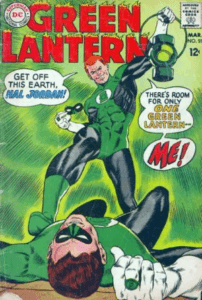
In December 1941, MLJ Magazines was publishing a patriotic superhero anthology called Pep Comics. The Shield was on the cover. Inside, at the back, somebody dropped in six pages about a red-headed teenager who could not get anything right. Pep Comics 22 value rests on that fact.

Every superhero in that comic is forgotten. Archie is still in print eighty-five years later, and the company eventually renamed itself after him.
This issue carries the first appearances of Archie, Betty and Jughead, and it is one of the most valuable non-superhero Golden Age keys outside of Disney.
The ladder holds up further down than most
The headline is $252,100, for the highest-graded CGC 8.0, at ComicConnect in September 2017. On most books I would then spend a paragraph warning you that a census-topping copy is not a price. Here I do not have to, because the results underneath it are unusually strong.
| Grade | Result | When |
|---|---|---|
| CGC 8.0 (highest graded) | $252,100 | September 2017, ComicConnect |
| CGC 7.0 | $143,400 (reported) | reportedly November 2014 |
| CGC 6.5 | $180,000 | June 2023, Goldin |
| CGC 6.5 | $135,000 (reported) | reportedly March 2015 |
| CGC 5.0 | $91,000 (reported) | reportedly December 2018 |
| rough but complete | around $9,000 (reported, undated) | , |
Most of what sits below the top line stays labeled as reported, because I could not trace those figures to a primary source, and I am not going to present a figure as documented when it is not. The 6.5 is the exception now: $180,000 at Goldin in June 2023 is a documented sale, and it lands well above the figure reported for the same grade eight years earlier. Five separate results, across four grades and nine years, all telling the same story, is a pattern rather than a rumor.
And the story they tell is the useful one: six figures shows up well down the grade ladder on this book. A CGC 5.0 is a copy that has clearly been read, rounded corners, creases, wear along the spine. That is the sort of copy that actually turns up in a family collection, and if the reported figure is anywhere near right, it is a life-changing comic to find in a box.
Check the rest of the run before anything leaves the house
This is the book I most often find people have thrown away, and the reason is that it does not look like a valuable comic. It looks like a beaten-up wartime funnybook with a superhero on the front, sitting in a stack of other beaten-up wartime funnybooks.
If a Pep Comics #22 is in a collection, the rest of the run almost certainly is too, because whoever bought it was a regular reader. Early MLJ issues have their own buyers, a CGC 8.0 of Pep Comics #20 sold for $35,765 at ComicConnect in March 2025, and #20 has no Archie in it at all.
So the instruction is simple: do not sort the pile before somebody who knows the titles has seen it. The famous number on the cover is not the only thing in the stack worth money, and the issues around it are exactly what gets discarded.
The Shield got there before Captain America
Worth knowing, partly because it is a good story and partly because it affects what else in the stack is valuable.
The hero on the cover of this comic is the Shield, and he debuted in Pep Comics #1 in January 1940, over a year before Captain America Comics #1. A patriotic hero in a flag costume, published by a small house, and largely forgotten now.
MLJ was doing reasonably well with superheroes and would probably have gone on doing so. Then the Archie strip in the back of issue 22 started outselling everything else in the book, and within a few years the company had reorganized itself around a teenager instead. By 1946 it was Archie Comics.
For a seller the useful part is this: Pep Comics #1 is itself a valuable comic on the strength of the Shield, and a CGC 8.5 brought $27,600 at Heritage in April 2021. So if a run of early Pep is in front of you, there are at least two issues in it that are worth real money for completely different reasons.
All the receipts I can verify
8 times since 2012, a Pep Comics #22 has crossed the block in the open. Every result:
| Grade | Result | Where and when |
|---|---|---|
| CGC 7.0 | $143,400 | Heritage Auctions, Nov 20, 2014 |
| CGC 7.0 | $216,000 | Heritage Auctions, Sep 30, 2025 |
| CGC 2.5 | $36,000 | Heritage Auctions, Nov 15, 2018 |
| CGC 2.5 Conserved | $19,200 | Heritage Auctions, Sep 10, 2020 |
| CGC 2.5 Conserved | $32,940 | Heritage Auctions, May 14, 2026 |
| CGC 2.0 | $28,680 | Heritage Auctions, Jul 27, 2012 |
| CGC 2.0 | $48,000 | Heritage Auctions, Dec 2, 2025 |
| Raw (PR) | $13,200 | Heritage Auctions, Jul 1, 2024 |
Sale records assembled from Heritage Auctions results and eBay completed sales via PriceCharting’s public feed, cross-checked against CGC’s published auction reporting. Heritage lots are verifiable in the catalog at comics.ha.com.
Selling a Pep Comics #22
- Confirm it is #22. The neighboring issues look almost identical on a shelf and are worth a fraction of it. The number on the cover and the date in the indicia settle it.
- Do not clean or flatten it. Wartime paper is brittle and the damage from a well-meant repair is permanent and obvious to a grader.
- Check for a missing back cover. MLJ books of this period often lost theirs, and it changes both the grade and the market.
- Grade it if it is complete. With six-figure results down to CGC 5.0, an independent grade pays for itself many times over on this issue.
If any copy of this book is in your family’s boxes, in any condition, that is a phone call before anything else. And when you call, I will look at the whole stack, not just the issue with the famous number on it.
Have a copy?
Send three photos: front, back, and the small print. That is all I need to tell you where your copy really sits.
I read every request myself.
Related
- What to do with an inherited collection, which is how most of these turn up.
- The 100 most valuable Golden Age comics, and what each one really sold for.
Cover images on this page are shown small, for identification, with the publisher credited in the caption. If you are a rights holder and want an image removed, contact me and it comes down.