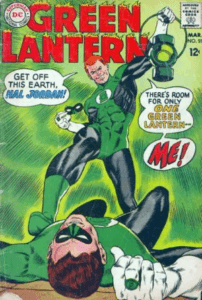
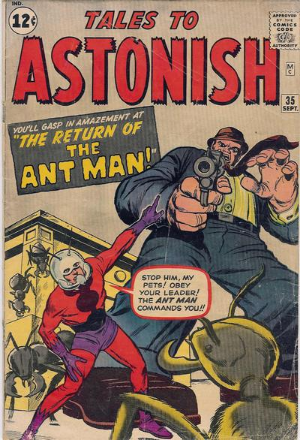
The short version: most comics from the 1990s are worth close to nothing — often less than a dollar each — and a small number of them are worth hundreds or thousands.
Both halves of that sentence matter. If you’ve got ten boxes of 90s comics in the garage, the realistic outcome is that the bulk of them are filler. But it would be a mistake to haul them to the recycling center without checking, because the exceptions from that decade are genuinely significant, and they’re almost never the books people assume.
Here’s why the decade turned out this way, and exactly what to look for in your boxes. If you’d rather have someone else do the flipping, I do free comic book appraisals across Southern California — call (951) 515-9604.
Why 90s comics are worth so little
It comes down to one thing: everybody saved them.
In the late 1980s, the press ran stories about a copy of Action Comics #1 selling for a fortune, and a generation drew the obvious conclusion — old comics become valuable, so new comics will too. Comics stopped being things you read and became things you invested in.
Publishers noticed and leaned in hard. The early 90s brought first issues with five different collectible covers, foil and holographic and embossed and die-cut covers, polybagged “collector’s editions” with a trading card sealed inside, and event storylines engineered to be historic. And people bought them by the case — not one copy to read, but ten to put away.
The print runs are hard to believe
The print numbers from that period are genuinely hard to believe. X-Men #1 in 1991 sold on the order of eight million copies, which remains the best-selling single comic issue of all time. X-Force #1 and Spider-Man #1 sold in the millions too.
So here’s the trap. Scarcity is what makes old comics valuable — a 1962 comic is worth money partly because kids read them to pieces and threw them out, and very few survive. But nobody threw out a 1992 comic. Millions of copies are still sitting in bags and boards in near-perfect condition in garages across the country. There is no scarcity, and there never will be. (Every book on our most-wanted list is from 1974 or earlier, and that isn’t a coincidence.)
The very thing that made people buy 90s comics — the belief they’d be valuable — is the thing that guaranteed they wouldn’t be.
Then the bubble burst around 1993–1996. Sales collapsed, distributors went under, thousands of comic shops closed, and Marvel filed for bankruptcy in 1996. The speculators left and never came back for the filler.
The 90s comics that are genuinely worth money

Value from this decade concentrated almost entirely in first appearances of characters who later got a film or television adaptation — and critically, in books that were not hyped at the time, so nobody hoarded them.
Check your boxes for these.
| Comic | Year | Why it matters | Rough value, high grade |
|---|---|---|---|
| New Mutants #98 | 1991 | First appearance of Deadpool | Very high — the decade’s standout |
| The Batman Adventures #12 | 1993 | First comic appearance of Harley Quinn | Very high — and widely overlooked by owners |
| New Mutants #87 | 1990 | First full appearance of Cable | High |
| Uncanny X-Men #266 | 1990 | First full appearance of Gambit | High |
| Bone #1 (Cartoon Books, first printing only) | 1991 | Self-published, tiny initial print run | High for a true first print |
| Harbinger #1 (Valiant, coupon still attached) | 1992 | The coupon was usually cut out and mailed in — intact copies are scarce | High with coupon, much lower without |
| Amazing Spider-Man #361 | 1992 | First full appearance of Carnage | Moderate to high |
| Batman: Vengeance of Bane #1 | 1993 | First appearance of Bane | Moderate to high |
| Superman: The Man of Steel #18 | 1992 | First full appearance of Doomsday (cameo in #17) | Moderate |
| Deadpool: The Circle Chase #1 | 1993 | First solo Deadpool series | Moderate |
| Green Lantern #48 | 1994 | First Kyle Rayner (his first full appearance is #50) | Moderate |
| Static #1 (Milestone) | 1993 | First appearance of Static | Moderate |
| Preacher #1 (Vertigo) | 1995 | First appearance of Jesse Custer | Moderate |
| Witchblade #1 (Top Cow) | 1995 | First issue of the series — but Sara Pezzini debuted earlier that year in Cyblade/Shi: The Battle for Independents #1, which is the book to look for | Low to moderate |
| Spawn #1 | 1992 | First Spawn — but printed in enormous numbers | Low to moderate despite the fame |
| Uncanny X-Men #282 | 1991 | First Bishop (cameo; his first full appearance is #283) | Moderate |
| Ghost Rider #1 (1990 series) | 1990 | First Danny Ketch as Ghost Rider | Moderate |
| Dark Horse Presents Fifth Anniversary Special | 1991 | First Sin City, April 1991. The serial then continues in Dark Horse Presents #51–62, which are worth considerably less — check which one you actually have | Moderate to high |
| San Diego Comic Con Comics #2 | 1993 | First US Hellboy appearance — a convention giveaway, which is exactly why so few survive. Dime Press #4 is the competing earlier claim | High |
| Venom: Lethal Protector #1 | 1993 | First Venom solo series | Low to moderate |
| Infinity Gauntlet #1 | 1991 | The storyline the films were built on | Low to moderate |
| Amazing Spider-Man #365 | 1992 | First Spider-Man 2099, in a back-up preview people ignored | Moderate |
Value bands are deliberately broad. Comic prices from this era move sharply on casting and streaming news, so check recent sold listings for a current figure rather than treating any published number as fixed. GoCollect and CovrPrice both chart these books over time, which is more useful than a single number on a decade this volatile.
The late 90s are a different decade entirely
Everything above is 1990 to 1995. After the crash, print runs collapsed — publishers stopped printing for speculators because the speculators had gone. So a 1997 or 1998 book can genuinely be scarcer than a 1992 one, even though nobody thinks of the late 90s as collectible.
That cuts both ways. Low print runs on books nobody wants are still books nobody wants. But if a late-90s issue turns out to be a first appearance of a character who later mattered, the survival rate works in your favor in a way it never does for 1992. It’s the one part of the decade worth checking issue by issue rather than by the boxful.
Notice the pattern. New Mutants #98 was issue ninety-eight of a title that was being canceled, with a villain nobody had heard of. The Batman Adventures #12 was a tie-in to a kids’ cartoon, which serious collectors ignored entirely. Nobody bagged these. That’s exactly why they’re worth something now, and why the books everyone did bag are worth nothing.
The 90s comics that are worth almost nothing
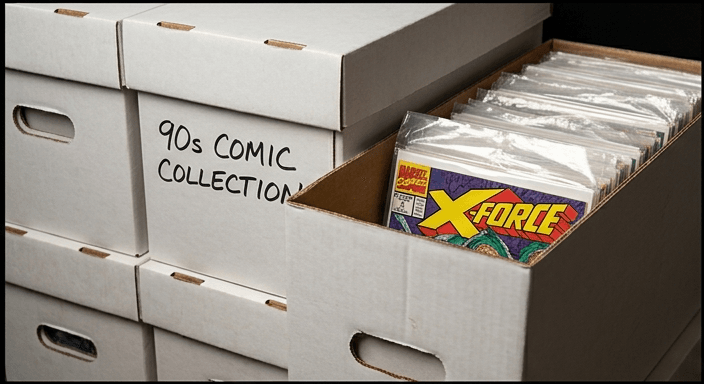
Said plainly, because people are often holding these specifically:
- X-Men #1 (1991), in any of its five covers, including the gatefold. Eight million copies. Worth a few dollars.
- Spider-Man #1 (1990), the McFarlane one, in all its variants — silver, gold, platinum, polybagged. Printed in the millions.
- X-Force #1 (1991) with the sealed trading card. Millions of copies, and the card doesn’t change that.
- Superman #75 (1992), the Death of Superman black polybag. The most heavily speculated comic of the decade. Sealed copies are common.
- Youngblood #1, Brigade, Bloodstrike, Prophet and most of the early Image speculation wave.
- Any foil, chromium, holographic, embossed or die-cut cover, as a general rule. These were manufactured to feel collectible and were printed accordingly.
- Wizard magazine, including the price guides that told everyone their comics were going up in value.
- Comics still sealed in the original polybag. This is worth spelling out: sealed does not mean rare. Millions of people left them sealed for the same reason you did.
If your collection is mostly this material, the honest answer is that it’s a bulk lot rather than a set of individual sales — and that’s the case no matter who you sell it to.
Here’s the number: common modern issues, roughly 1980s to now, run about 10 to 30 cents each depending on how many there are and what’s mixed in. That is not a big number, and I’d rather you heard it here than after somebody drives out. It is cash the same day and the space back, which for a lot of people is the actual point. Silver Age bulk pays better than that, and Golden Age substantially better.
If that’s what your boxes look like, text a photo of a couple of them to (951) 515-9604 and I’ll tell you what the lot is worth before anyone gets in a car.
Three things that can change the answer
Newsstand copies
Through the 90s, comics were printed in two versions. Direct edition copies went to comic shops and carry a small logo or box where the barcode would be. Newsstand copies went to grocery stores and pharmacies and carry a real UPC barcode.
By the mid-90s newsstand copies were a shrinking minority of the print run, and they were bought by casual readers who didn’t preserve them. For a key issue, a high-grade newsstand copy can be worth a significant multiple of the direct edition. Check the lower-left corner of the front cover on anything from the list above.
First printing versus later printings
When a 90s book sold out, publishers went straight back to press. Second and third printings of Bone #1 or Spawn #1 are worth a small fraction of a genuine first print. The printing is usually noted in the indicia — the block of small legal text inside the front cover or on the first page.
Grade, but only on the keys
Because so many high-grade copies survive from this era, condition standards are brutal for 90s books. Collectors who want a 90s key generally want a 9.6 or better, and the price difference between a 9.4 and a 9.8 on a top key can be enormous. The CGC census is free to search and will show you how many copies of a given book already exist at each grade — useful for working out whether yours is scarce or one of thousands.
This cuts the other way for everything else: grade is irrelevant on a book that’s worth a dollar, and there is no point paying to have common 90s issues professionally graded. More on that in our guide to what your comics are worth, and on how a grade is actually arrived at in our comic book condition and grading guide.
So what should you actually do with them?
- Check the list above first. Twenty minutes of flipping through boxes finds the keys if they’re there.
- Look up anything you find using sold listings, not asking prices. Search the title and issue on eBay, then filter to Sold Items. What people are asking is meaningless; what people paid is the price.
- Don’t grade anything speculatively. Grading a common book costs more than the book is worth.
- Sell the keys individually and the rest as a lot. That’s how the market actually works, and trying to sell filler issue-by-issue online will cost you more in time than it returns. Where to sell comic books in Southern California compares what each route pays.
- Get the boxes out of the garage. If they’re anywhere hot in Southern California, the heat is degrading the paper right now, and it’s permanent. If the collection isn’t yours — if it came from a parent or a relative — start here instead, because the order of operations is different when an estate is involved.
Or just have someone look
Going through three thousand 90s comics by hand is a genuinely tedious weekend, and the answer for the overwhelming majority of them is “a dollar.”
I do this constantly at EZ Comic Buyer, so I’m recognizing books on sight rather than looking each one up. I come to you — house, garage, storage unit — anywhere in Los Angeles, Orange County, Riverside, San Bernardino or San Diego county, go through the collection with you, and tell you straight what’s in there. If it’s a box of Youngblood, I’ll say so. If there’s a New Mutants #98 in the middle of it, I’ll pull it out and show you.
Free, no obligation, same-day cash offer if you want one. See how it’s gone for other people on our reviews page, read what I guarantee, or check the FAQ.
Got 90s boxes? Let’s find out what’s in them.
Free valuation anywhere in Southern California — and I’ll tell you honestly if it isn’t worth my drive out.
Frequently asked questions
What is the most valuable comic book from the 1990s?
New Mutants #98 from 1991, the first appearance of Deadpool, is generally the most valuable mainstream comic of the decade — particularly in high grade; I’ve written a full guide to checking a copy. The Batman Adventures #12 from 1993, the first comic appearance of Harley Quinn, is the other standout and is far more likely to be sitting unrecognized in a collection, because it was a tie-in to an animated series that collectors dismissed at the time; that one has its own guide now too.
Why is X-Men #1 from 1991 worth so little?
Because roughly eight million copies were printed, and most were bought as investments and stored carefully rather than read. It remains the best-selling single comic issue ever published. Value requires scarcity, and there is no scarcity of high-grade copies.
Are comics still sealed in the original polybag worth more?
Generally no. Polybagged comics were marketed as collectibles, so a very large number of people left them sealed for exactly that reason. Sealed copies are common rather than rare. On a book that has real value, an unopened bag can add a modest premium — but it will not turn a common issue into a valuable one.
Is Spawn #1 valuable?
Less than most people expect. It’s a famous and historically important comic, but it was printed in enormous quantities — well over a million copies — so raw first-printing copies typically sell for modest amounts. Later printings are worth considerably less again.
How do I check what a 90s comic actually sells for?
Search the exact title and issue number on eBay, then filter results to Sold Items. Compare only against the same issue in similar condition and format — a professionally graded copy in a plastic slab is a different product from a raw copy. Take the middle of the recent range rather than the highest sale.
Should I just throw away my 90s comics?
No — check them first. The keys from this decade are worth real money and they’re rarely the issues people expect, so a collection that looks like pure filler can still contain something significant. If nothing turns up, they can be sold as a bulk lot, donated to a library or hospital, or passed to someone who’ll read them.
Before you take them to the recycling center
- How much are my comic books worth? — the four factors behind every valuation.
- You inherited a comic book collection — what now? — a step-by-step guide.
- What a 9.6 actually means — why 90s keys need one, and how graders get there.
- Where to sell comic books in Southern California — your options compared.
- Get a free appraisal — I come to you, anywhere in SoCal.
- Our most wanted list — none of them are from the 90s, which is the point.