Here’s the honest answer most guides won’t give you up front: the large majority of comic books are worth between fifty cents and a few dollars each. Value in this hobby is wildly concentrated. A typical collection is a few thousand filler issues and, if you’re lucky, two or three genuinely significant books — and those two or three can be worth more than everything else put together.
That’s not a reason to be discouraged. It’s a reason to find out which books yours are. A collection that looks unremarkable can hide a four-figure issue in the middle of a stack, and plenty of people have sold a whole box for twenty dollars at a garage sale without knowing what was in it.
This guide walks through what actually drives comic book value, how to check real prices rather than fantasy prices, and how to tell in a few minutes whether you’re holding something that matters. If you’d rather skip straight to a real number, I do free comic book appraisals across Southern California — call or text (951) 515-9604 — a few photos of the boxes is usually enough to start.
The four things that decide what a comic is worth
Every valuation comes down to these, roughly in this order of importance.
1. Is it a “key issue”?

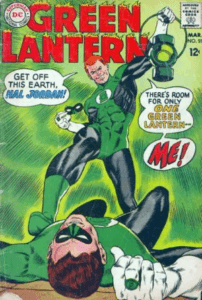
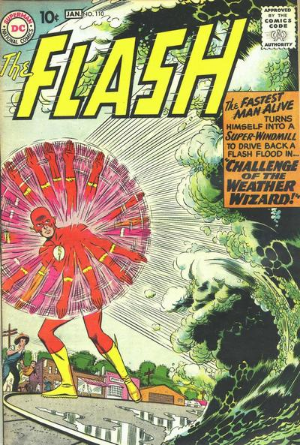
This is the big one, and it’s the factor most owners underestimate. A key issue is a comic where something significant happened for the first time — a character’s first appearance, a first cover appearance, a costume change, a major death, a first issue of a long-running title, or the first work by a now-famous creator.
The gap between a key and a non-key is enormous. Two comics printed the same month, by the same publisher, in the same condition, can differ in value by a factor of a thousand — purely because one of them introduced a character who later got a movie.
Almost every book on our list of the ten comics I most want to find is on it for this reason — Amazing Fantasy #15 for Spider-Man, Amazing Spider-Man #1 for his own title, Tales of Suspense #39 for Iron Man. Worth a look before you assume you have nothing.
This is also why “I have a complete run” is less exciting than it sounds. A complete run of 200 issues where four are keys is, financially, four comics and a lot of filler. Runs have real value to collectors who want them intact, but the pricing is driven by the keys.
2. Condition
Comics are graded on a 10-point scale, from 0.5 (barely holding together) to 10.0 (theoretically perfect). Condition affects value multiplicatively, not additively — and the effect is much more violent at the top of the scale than the bottom.
For a common book, the difference between a 6.0 and a 9.0 might be a couple of dollars. For a genuine key issue, that same difference can be tens of thousands. That single fact decides most of what follows: professional grading is worth paying for on a valuable book and is money thrown away on everything else, and it is why I will happily quote a shoebox over the phone but want to hold a key issue in my hands before I put a number on it.
Owners tend to over-grade their own comics, usually by a grade or two. That’s not pessimism — it’s that graders are looking for things you’re not: the spine first, then whether a crease has actually broken the color, then corners, tears on the back cover, and the staples. None of it is hard once somebody shows you where to look, and it’s the part of valuation people get wrong most often, so I wrote it up on its own — the grade-by-grade scale, what each defect costs, and which ones a professional can take back out — in my guide to comic book condition and grading.
One point belongs here rather than there, because it’s about money and not about grading: how bright the colors are doesn’t move the technical grade at all, but it moves the price. Two copies can carry the same number on the label and sell hundreds of dollars apart if one of them has gone sun-faded, so a washed-out book has to be discounted before anyone takes it.
3. Scarcity — and why the 1990s ruined this for a generation
How many copies exist matters enormously, and print runs across comics history are not remotely comparable.
Comics from the 1930s through the 1960s were printed on cheap paper, read to pieces, thrown out, and collected by almost nobody. Very few survive in good condition, which is why Golden Age and Silver Age keys command what they do.
Then came the speculation bubble. In the early 1990s, publishers printed comics in quantities that are difficult to comprehend — X-Men #1 in 1991 sold somewhere around eight million copies, a record that still stands. Millions of those were bought by adults who bagged them, boarded them, and stored them carefully as an investment. The result: near-mint copies are abundant thirty-five years later, and the book is worth a few dollars.
If your collection is mostly early-90s material in great condition, that abundance is exactly the problem. I wrote a whole post on this — see are 90s comic books worth anything? — because there are real exceptions worth hundreds or thousands, and they’re not the ones people expect.
4. Current demand
Comic values move with attention. A character’s first appearance can triple on a casting announcement and give most of it back when the show underperforms. This cuts both ways: it means timing affects your sale price, and it means a price you saw quoted three years ago may be badly out of date in either direction.
How to check what your comics are actually selling for
There’s one rule that matters more than every other piece of advice in this article:
Look at what comics have SOLD for. Never at what sellers are ASKING for.
Anyone can list a comic for $5,000. That listing tells you nothing. It can sit there for years. The only number with meaning is what a real buyer actually paid.
The free method: eBay sold listings
- Search eBay for the exact title and issue number — for example, Amazing Spider-Man 300.
- In the filters, turn on Sold Items. This is the entire trick, and most people never find it.
- Ignore anything that isn’t the same issue, same condition tier, and same format. A graded 9.8 in a plastic slab is a different product from your raw copy.
- Look at the last 30–60 days of sales and take the middle of the range, not the top.
Then subtract. If you sell it yourself on a marketplace, fees and shipping typically take 15–20% off that number, and you’re doing the photographing, listing, packing, and dealing with returns and claims.
Five ways sold listings will still mislead you
“Check sold listings” is the advice everyone gives and almost nobody qualifies. The filter gets you to real transactions, but real transactions lie in specific, repeatable ways, and this is where most people’s numbers go wrong:
- Graded and raw copies sit in the same results. A slabbed 9.8 and a loose copy of the same issue are two different products at two different prices, and eBay shows them side by side. If the sold price you’re looking at came from a plastic case, it isn’t your book’s price.
- Restored copies often aren’t flagged in the title. A book that’s been color-touched or trimmed sells for a fraction of an unrestored copy, and plenty of sellers only disclose it further down the listing. A price that looks like a bargain in the sold results is frequently a restored copy.
- Best-offer sales show the asking price, not what was paid. If a listing shows “Best offer accepted”, the number on screen is what the seller wanted. What actually changed hands was less, and eBay doesn’t show you how much less.
- Returned and cancelled sales stay in the results. A sale that fell through still displays as sold. One unusually high number in a run of ordinary ones is worth ignoring rather than celebrating.
- Shipping is sometimes inside the number and sometimes not. On an international sale it can be a meaningful chunk of what you’re reading as the sale price.
The practical version: throw away the highest sale and the lowest, ignore anything graded if your copy isn’t, and take the middle of what’s left. If three sales cluster and one is double, the double is the one to distrust.
Free tools, and where each one will let you down
- PriceCharting — free, covers graded and raw, and shows price history rather than a single number. The history is the useful part, because it tells you whether you’re looking at a spike.
- ComicsPriceGuide — enormous coverage. Treat its values as a starting point rather than an answer; breadth and accuracy pull against each other.
- Grand Comics Database — not a price guide at all, and the best free tool on this list for what it does do: confirming exactly which book and which printing you’re holding before you price anything.
- Cover-scanner apps — fine for building a list quickly. They routinely misidentify printings and variants, which is precisely the distinction that carries the money, so don’t price from them.
Every one of these has the same blind spot: they price a book, and a collection is not a stack of individually priced books. Nobody buys 3,000 comics at guide value one at a time.
Paid tools worth knowing about
- GoCollect and CovrPrice — track real sales data over time and show you trend lines. Useful if you have a lot of keys.
- The Overstreet Comic Book Price Guide — the long-standing annual reference. Treat it as a historical benchmark rather than a live price. It’s published once a year, and a market that moves on casting news moves faster than an annual book can.
- Heritage Auctions archives — free to browse, and the best source for high-end books, since that’s where they sell.
- The Grand Comics Database — free, and not a price guide at all. It’s the best place to confirm what a book actually is: publisher, cover date, printing, and what first appeared in it. Identify the comic here, then price it on sold listings.
A five-minute triage of your own collection
You don’t need to look up 400 comics. Pull out anything matching the list below and check those first — this will find nearly all of the value in a typical collection. If these boxes came to you from someone else rather than being yours, the inherited-collection guide walks the same triage in a different order, and covers the things that only come up with an estate.
- Anything printed before 1970. Check every single one regardless of condition or how boring the cover looks.
- Any issue #1. Not all are valuable, but it’s a fast filter.
- Cover prices of 10¢, 12¢, 15¢ or 20¢. Faster than hunting for a date. 10¢ means 1961 or earlier, 12¢ is roughly 1962–1969, 15¢ is roughly 1969–1972, and 20¢ is roughly 1972–1975.
- Covers announcing a first appearance — banners like “Introducing…” or “First appearance of…” or a new character in a splashy debut pose.
- Anything with a character you recognize from a film, in an old-looking book.
- Comics already in hard plastic cases with a grading label (CGC, CBCS, PGX). Someone already thought these were worth money.
- Anything that looks like it was never read and is pre-1985.
The newsstand trick almost nobody knows

From the late 1970s through the 1990s, comics were printed in two versions. Direct edition copies went to comic shops and have a small box or logo in place of the barcode. Newsstand copies went to grocery stores and pharmacies and have a real UPC barcode.
Newsstand copies were bought by casual readers, jammed into spinner racks, and mostly destroyed. By the 1990s they were a small minority of the print run. For key issues, a high-grade newsstand copy can be worth a substantial multiple of the direct edition of the same book.
So: look at the lower-left corner of the front cover. If there’s a real barcode there and the comic is a key issue, look it up separately.
Rough value expectations by era

Very broad generalizations, for orientation only — keys break every one of these rules.
| Era | Years | Typical non-key book |
|---|---|---|
| Golden Age | 1938–1956 | Meaningful value even for common issues. Always check. |
| Silver Age | 1956–1970 | Modest but real value; keys can be extraordinary. |
| Bronze Age | 1970–1985 | A few dollars typically; strong keys in horror, war and early Marvel titles. |
| Copper Age | 1985–1991 | Low, with sharp exceptions around first appearances. |
| Modern | 1992–today | Usually under a dollar unless it’s a specific key or a scarce variant. |
Four mistakes that destroy value
- Don’t clean them. Not with a cloth, not with an eraser, not with anything. Cleaning an old comic damages the surface and is detectable. Dust and all, leave it.
- Never use tape. Tape on a comic is permanent damage and slashes the grade. This includes taping a bag shut against the book.
- Don’t stack them flat in tall piles for long periods, and don’t stand them in a box loosely so they lean. Store upright, snug but not tight, out of sunlight and away from garage humidity and heat — the two things that quietly ruin most SoCal collections.
- Don’t trim, press, or flatten anything yourself. Amateur restoration is worse than the flaw it hides, and undisclosed restoration is the fastest way to lose a buyer’s trust. Pressing is a real service that real professionals perform, but it is not for every book and it is not a kitchen-table job — the grading guide covers which books it helps and which it ruins.
And one thing to check before you assume a book is valuable
Plenty of comics shipped with something inside that was meant to be taken out — stamps, tattoo sheets, pinups, posters — and readers took them out, exactly as intended, because nobody in the 1970s thought the comic itself would matter later. The book still looks complete on the shelf. It isn’t, and the gap shows up in the price.
The famous one is the Marvel Value Stamp. The Incredible Hulk #181 — the first full Wolverine, and number nine on our most-wanted list — has one in it, and cutting it out costs roughly 60% of the value in my experience. A single square of paper. If you own Marvel books from the middle of the 1970s, assume a stamp was in there until you have turned the pages and checked.
Which issues carried what, and what each missing piece actually costs, is laid out in the grading guide. The rule for triage is short: before you decide a book is or isn’t worth something, find out whether it was supposed to come with anything.
When it’s worth just asking a buyer
Researching individual issues is genuinely interesting if you enjoy it. It’s also slow — a few hundred comics is a full weekend, and the answer for most of them will be “about a dollar.”
If your goal is a number rather than an education, a working buyer can sort a collection far faster than you can, because I’m pattern-matching against books I handle constantly rather than looking each one up.
That’s what I do at EZ Comic Buyer. I’m mobile — I come to your home, storage unit, or wherever the boxes actually are, anywhere in Los Angeles, Orange County, Riverside, San Bernardino or San Diego county. I go through the collection with you, explain what’s driving the numbers, and make a same-day cash offer. There’s no charge and no obligation if you’d rather keep them, and plenty of people use the visit just to find out what they’ve got.
You can see what that’s been like for other people on our reviews page, read what I guarantee before you book anything, or check the FAQ if you have a question I haven’t covered here.
Find out what your comics are worth
Free, no obligation, anywhere in Southern California. Send a few photos or just tell me roughly how many boxes you have — I can usually give you a ballpark before I drive out.
Frequently asked questions
How can I tell if my comic is a first appearance?
Search the character’s name plus “first appearance” and compare the title, issue number and cover date to your copy — the Grand Comics Database is free and lists this issue by issue. Be careful of the difference between a first cameo (a panel or two), a first full appearance, and a first cover appearance — they’re different books at different prices. Also check the indicia inside the front cover for the true issue number, since covers sometimes carry different numbering.
Are comic books in plastic bags worth more?
The bag itself adds nothing. What matters is the condition the bag helped preserve. A bagged and boarded comic stored upright in a cool, dark place will usually grade higher than an identical copy left in a hot garage — and that’s where the value difference comes from.
Should I get my comics graded before selling?
Usually not. Professional grading costs money per book plus shipping and insurance and takes weeks or months. It only pays on books where the graded price meaningfully exceeds the raw price — generally genuine keys in high grade. Sending in a box of common issues costs more than the comics are worth. If you have one you think might justify it, I hold a CGC dealer account and can talk it through on a free appraisal before you ship anything.
Is the Overstreet price guide accurate?
It’s a respected annual reference, but it’s published once a year and comic values can move substantially in weeks. Use it for historical context and use recent sold listings for what something is worth today.
Do you buy small collections, or only big ones?
Both. Collection size matters less than what’s in it — a single box with two keys can be worth more than twenty boxes of 1990s filler. Tell me roughly what you have and I’ll be straight with you about whether a visit makes sense.
What if I decide I don’t want to sell?
That’s completely fine. The valuation is free and there’s no obligation attached to it. Some people just want to know what’s in the boxes before they decide anything.
If you found something
- Comic book condition and grading — how I actually grade a book, defect by defect.
- Are 90s comic books worth anything? — the honest answer, plus the two dozen exceptions that genuinely are.
- You inherited a comic book collection — what now? — a step-by-step guide for handling someone else’s comics.
- Where to sell comic books in Southern California — your options compared.
- What I actually do on a visit — and what it costs, which is nothing.
- Our ten most wanted comics — worth two minutes before you sort anything.