Ten cents in the fall of 1939 bought a sixty-four page comic with a man on fire on the cover. Timely Publications printed it, nobody involved had any reason to think it would still be discussed almost ninety years later, and it turned out to be the first comic book the company we now call Marvel ever put out. Marvel Comics #1, cover-dated October 1939. It is the beginning of the entire thing, which is exactly why Marvel Comics #1 value behaves unlike any other Timely book.

Inside it: the first appearance of the Human Torch, the android Torch created by Carl Burgos, not the Fantastic Four member who took the name twenty years later. The first newsstand appearance of Namor, the Sub-Mariner, with an asterisk I will explain in a moment. The first comic book appearance of Ka-Zar, who had already run in the pulps. And the Angel, a trench-coated Timely hero with no relation to the X-Men character of the same name.
Four debuts in one ten-cent package, from a publisher that did not exist the year before. That is why this book sits in the same conversation as Action Comics #1 and Detective Comics #27, and why it earns a spot near the top of the Golden Age value list.
Here is what the public record shows.
| Documented high | $2,427,777 for the CGC 9.2 “Pay Copy” pedigree, March 2022, ComicConnect |
| Finest known | $1,260,000 for the CGC 9.4 Windy City pedigree, November 2019, Heritage Auctions |
| Low grade | $363,527.65 for a CGC 2.5, March 2022, ComicConnect, in the same auction as the Pay Copy |
| Reported floor | A price guide reports an any-condition minimum in the $20,000 to $22,710 range. That figure is undated, so treat it as a shape rather than a quote. |
I buy comic collections throughout Southern California, and I will say the honest thing up front: a verified 1939 copy should be sold in a major auction room, not in the trunk of my car. What I can do is help you find out whether you have one, which is a much harder question than it sounds.
The Sub-Mariner footnote, told straight
You will see Namor’s first appearance credited to two different comics, and both credits are defensible. Here is the whole picture.
Namor’s Bill Everett story ran earlier in 1939 in Motion Picture Funnies Weekly #1, which was not a comic anyone bought. It was a promotional giveaway meant to be handed out in movie theaters, and the giveaway never really happened at scale. Something like eight copies are known to exist today. So Namor technically appeared there first.
What collectors do with that fact is call Marvel Comics #1 Namor’s first newsstand appearance. It is the first time a paying member of the public could walk up to a rack, hand over a dime, and come home with him. The market is drawing a line between a book that was distributed and a book that essentially was not. Both are extraordinarily valuable, and I am deliberately not printing a number for the theater giveaway, because with that few copies known, every sale is its own private market and any figure I typed would mislead you.
Original or reprint: check the indicia before anything else

This is the section that matters most for the most people, so it is the longest one. Marvel has reproduced this cover more times than almost any other image it owns. There was a Marvel Milestone Edition in the 1990s, a full reprint of the whole issue. There have been modern facsimile editions on the same principle, cover to cover, ads included. The cover art turns up constantly on hardcover collections, omnibus dust jackets, posters, t-shirts and convention prints. Anyone who opens a box and sees that burning figure has every reason to think they have found something, and the odds are heavily against it.
Open the book and read the indicia first. The indicia is the small legal block Timely printed on the opening page: publisher name, date, copyright line. An original says Timely Publications and gives a 1939 date. A reprint admits what it is right there, in that same block, no matter how faithful the cover looks. Milestone Editions and facsimiles are not forgeries; they simply reproduce the cover so well that the cover cannot settle the question. The indicia can, in about ten seconds.
One wrinkle worth knowing while you are in there: this issue was printed twice in 1939, and the indicia date is what separates the printings, October for the first and November for the second. The difference is worth real money. Before you conclude anything either way, check your copy against the free listings at the Grand Comics Database, which catalogs every printing of everything.
The physical tells
If the indicia is missing, torn away or unreadable, the book itself still tells you. An eighty-six year old comic and a comic printed in your lifetime do not feel remotely alike.
- Paper color and feel. 1939 interiors are newsprint: soft, slightly furry at the edges, and browned somewhere between cream and tobacco. The whole page is discolored, not just the rim. It is fragile in a way modern paper never is. Reprint interiors are whiter, smoother and stiffer, and modern facsimile covers are usually glossier than a 1939 cover, which is flat.
- Staples and rust. Original copies have two staples that have been oxidizing since before the war. Expect dull gray metal, orange rust bloom, and rust migration staining the paper around each staple. Bright, clean, evenly seated staples on a book claiming to be from 1939 are a very loud warning.
- Trim and size. Golden Age comics were physically larger than modern ones, taller and wider, with a squared-off look. Set a reprint next to an original and the difference is obvious across the room.
- The price box. An original reads 10c. A modern facsimile carries a modern cover price, and a Milestone Edition carries a 1990s one. Nobody printed a dime comic in the 1990s.
- Modern trade dress. A UPC barcode box, a modern Marvel corner box logo, a “Facsimile Edition” or “Milestone Edition” banner, a modern legal line, a website URL: all of these settle it instantly. None of them existed in 1939.
None of that requires expertise. It requires holding the book and believing what is in front of you rather than what you hope is.
Why the record sale is not your comparison
Both of the big numbers on this book are attached to pedigrees, and a pedigree is a specific thing rather than a compliment. It means a copy is documented as coming from a known original-owner collection, and CGC prints that collection’s name right on the label. Pedigreed copies command a premium because their provenance is proven and, in the famous collections, because the books were stored in a way that left them dramatically better than the average survivor.
The Windy City copy is the straightforward case. At CGC 9.4 it is the finest known copy of this book, and when it sold for $1,260,000 at Heritage in November 2019 it was the most expensive Marvel comic ever sold. That is a condition record, the top rung of the grade ladder.
The Pay Copy is something else entirely, and it is worth understanding why it out-sold the finest known copy at a lower grade. This was the editorial office’s own copy, and someone at Timely used it as a ledger: handwritten contributor-payment records are on the cover and on seven interior pages, including the note that Carl Burgos was paid $128 for sixteen pages of Human Torch. That is not a comic book with writing on it. That is the payroll document of the day Marvel began, written on the artifact itself. It graded CGC 9.2 and brought $2,427,777 at ComicConnect in March 2022. The same copy had sold for $350,000 back in 2002.
So if you have a plain copy, neither of those sales is your comparison. A copy with no documented provenance prices off the grade ladder: what your grade has recently traded for, adjusted for completeness and restoration. Pedigree money is a separate market riding on top of that ladder, and the Pay Copy is a market of exactly one.
Every documented public sale, 2002 to 2026
For a book this famous, Marvel Comics #1 has a strikingly thin public record: the thirty-seven dated results below are all of it. The thinness is itself information, because supply, not demand, is what sets the price here.
| Grade | Result | Where and when |
|---|---|---|
| CGC 9.4 | $1,260,000 | Heritage Auctions, Nov 21, 2019 |
| CGC 9.0 | $161,000 | Heritage Auctions, Oct 14, 2005 |
| CGC 9.0 | $201,250 | Heritage Auctions, Jan 19, 2006 |
| CGC 9.0 | $205,000 | Heritage Auctions, Aug 3, 2007 |
| CGC 9.0 | $227,050 | Heritage Auctions, Feb 25, 2010 |
| CGC 9.0 Restored | $158,600 | Heritage, May 7, 2026 |
| CGC 8.5 | $126,500 | Heritage Auctions, Mar 6, 2003 |
| CGC 8.5 | $172,500 | Heritage Auctions, Aug 13, 2005 |
| CGC 8.5 | $155,350 | Heritage Auctions, Feb 26, 2009 |
| CGC 8.0 | $101,575 | Heritage Auctions, Nov 17, 2006 |
| CGC 8.0 | $89,625 | Heritage Auctions, Nov 15, 2007 |
| CGC 8.0 | $89,625 | Heritage Auctions, Nov 19, 2009 |
| CGC 7.5 | $113,525 | Heritage Auctions, Feb 22, 2012 |
| CGC 7.5 | $675,000 | Heritage, Mar 30, 2023 |
| CGC 7.0 | $83,650 | Heritage Auctions, May 21, 2009 |
| CGC 7.0 Restored | $228,000 | Heritage Auctions, Jun 20, 2024 |
| CGC 6.0 | $36,800 | Heritage Auctions, Oct 10, 2002 |
| CGC 6.0 | $71,700 | Heritage Auctions, Feb 24, 2011 |
| CGC 5.0 | $33,350 | Heritage Auctions, Oct 10, 2002 |
| CGC 4.5 | $34,500 | Heritage Auctions, Jul 4, 2002 |
| CGC 4.5 | $33,460 | Heritage Auctions, Nov 19, 2009 |
| CGC 4.5 | $360,000 | Heritage Auctions, Jan 13, 2022 |
| CGC 4.5 | $288,000 | Heritage Auctions, Jun 20, 2024 |
| CGC 4.0 | $37,950 | Heritage Auctions, Feb 7, 2004 |
| CGC 4.0 | $38,838 | Heritage Auctions, Aug 5, 2010 |
| CGC 4.0 | $68,712 | Heritage Auctions, Aug 27, 2015 |
| CGC 3.5 | $35,850 | Heritage Auctions, Feb 26, 2009 |
| CGC 3.5 | $32,265 | Heritage Auctions, May 20, 2010 |
| CGC 3.0 | $77,675 | Heritage Auctions, Nov 17, 2016 |
| CGC 3.0 | $223,200 | Heritage Auctions, Nov 17, 2022 |
| CGC 2.5 | $363,527 | ComicConnect, Mar 17, 2022 |
| CGC 2.0 | $18,400 | Heritage Auctions, Feb 9, 2005 |
| CGC 2.0 Restored | $156,000 | Heritage Auctions, Sep 9, 2021 |
| CGC 0.5 | $22,705 | Heritage Auctions, May 28, 2015 |
| Raw | $17,250 | Heritage Auctions, Mar 15, 2002 |
| Raw | $5,079 | Heritage Auctions, Nov 20, 2014 |
| Raw (PR) | $22,800 | Heritage Auctions, Nov 14, 2022 |
Sale records assembled from Heritage Auctions results and eBay completed sales via PriceCharting’s public feed, cross-checked against CGC’s published auction reporting. Heritage lots are verifiable in the catalog at comics.ha.com.
The one deep column is CGC 9.0, five sales: $161,000 in 2005, $201,250 in 2006, $205,000 in 2007, $227,050 in 2010, and then $158,600 in May 2026. Four rising results from the 2000s and one 2026 sale below all of them. One row is not a trend, but it is a warning against pricing this book off its 2019 record, and I would want a second recent comp before believing either direction.
Everything below 9.0 trades so rarely that each sale is its own event. When a book averages barely one public sale a year across all grades, the honest quote is a range anchored to the two or three nearest rows, plus a conversation about which market your copy actually belongs in.
If your copy is beaten, read this part twice
Nearly every survivor of 1939 is rough, and people talk themselves out of valuable books all the time because rough feels worthless. On this comic, that instinct is expensive.
In that same March 2022 ComicConnect auction that produced the Pay Copy record, a CGC 2.5 copy sold for $363,527.65. Sit with what a 2.5 actually is. On the ten-point scale that is a “Good” book, and “Good” is a polite word for badly used: heavy spine wear, creases through the cover art, corners gone soft or missing, tanned and brittle pages. That is a comic most people would describe as trashed. It brought over a third of a million dollars in a public sale with the date and the auction house on the record.
That single number is the most useful thing on this page for anyone who actually owns the book, because it separates this comic from almost everything else. On most keys, condition is the whole argument and a low-grade copy falls off a cliff. On Marvel Comics #1, scarcity carries the floor. There simply are not enough copies for a rough one to be cheap. If you want to understand what a grader is looking at when they arrive at a number like 2.5, my grading guide walks through each defect and what it costs.
Two honest caveats. Complete matters enormously. Missing pages, a missing centerfold, a clipped coupon or a cut-out panel all pull hard, and a book that has been restored gets a purple label and is priced in its own separate market. And that reported floor in the $20,000 to $22,710 range comes from a price guide with no date attached, so I would not lean on it; the documented 2.5 sale is the sturdier reference point.
What to actually do, in order
- Photograph it exactly where it sits. Before you move it, before you slide it out of anything, before you take it to better light. Get the front cover, the back cover, the spine, and the indicia page. If the paper is brittle, the safest thing you can do with the book is nothing.
- Do not clean it, tape it, flatten it or press it. Not with an eraser, not with tape on the spine, not under a stack of books overnight. Every one of those is restoration or damage in the eyes of a grader, and on a book at this level, an afternoon of helpful tidying can cost more than a car. Leave the dirt on it.
- Confirm the printing. Indicia first, then the physical tells above, then the Grand Comics Database. Answer this before you talk to anyone about money.
- Get it authenticated and graded. This is one of the rare books where third-party grading is not optional. Nobody is paying six or seven figures for a raw copy on trust, and the grade is the number the entire market prices off. Do not ship it anywhere casually; it needs to be packed and insured properly.
- Have the venue conversation honestly. A confirmed original of this comic sells at a major auction house, with a catalog, a reserve and international bidders in the room. Both records on this page were made that way, at ComicConnect and Heritage. A local cash offer cannot compete with that and it would be dishonest of me to pretend otherwise.
Which brings me to where I fit. At this altitude I am your confirmation call and your guide, not your buyer. Send the pictures and I will tell you plainly whether what you have is a 1939 original, a Milestone Edition, a facsimile or a poster, and if it is the real thing I will point you at the people who should be selling it. If it turns out to be a reprint, you have lost a text message and gained an answer, and the rest of the box is still worth talking about. My appraisal page explains how I look at a collection in general.
The last thing I want to leave you with
Most people who read this page do not own Marvel Comics #1. They own a Milestone Edition, a facsimile, or an omnibus with the cover on the front.
But books from 1939 do still surface in this state, out of garages and closets and estates, and the reason they get lost is almost never that somebody sold one cheap on purpose. It is that nobody read the small print, or somebody decided to tidy up a dirty old comic first. Read the indicia. Leave the dirt alone. Then make a phone call.
Selling a Marvel Comics #1
The first question a buyer will ask is not what grade it is. It is which printing you have, because the October 1939 first printing and the November second printing are different books to a collector, and the indicia settles it. Get that answered before anything else, because every number that follows depends on it.
Then grading, then venue. The documented sales on this title cluster at the major houses for a reason: that is where the people who buy Timely at this level actually are. And take the CGC 2.5 that brought $363,527 in 2022 as the encouragement it should be. If your copy is beaten, incomplete or ugly, it is still worth putting in front of the right room rather than accepting the first private number someone offers you for it.
My role stops at confirming what you have and telling you where it belongs. That is worth a text either way, because knowing it is a 70th Anniversary Edition today is better than finding out during a sale. And whatever else came out of that collection, from Golden Age Timely to whatever is at the bottom of the box, is what I actually buy, for cash, anywhere in Southern California.
Think it is the 1939 one?
The fine print settles it, so send that page along with the cover. I will tell you what you have, and what the rest of the box is worth looking at.
I read every request myself.
Next steps
- The 100 most valuable Golden Age comics, the full list this book sits on.
- What to do with an inherited collection, since that is how these books usually surface.
- How grading actually works and how I handle slabbed books.
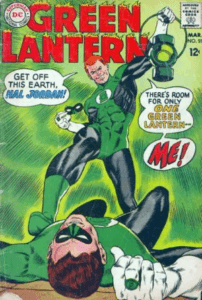
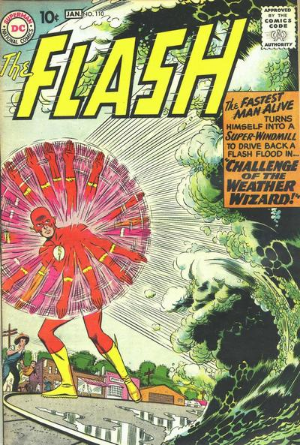
Cover images on this page are shown small, for identification, with the publisher credited in the caption. If you are a rights holder and want an image removed, contact me and it comes down.